A child not only needs to be supported at school but also at home. Hence, parent-teacher communication is extremely crucial for better nurturing of the little ones.
During the early years, children experience rapid growth in aspects like emotional, social and intellectual, which eventually shape their future development. These formative years determine how the toddler will approach relationships, academics and challenges later on in life. That’s the reason why many parents look for one of the best play schools in Kolkata, like Little Scholars Playhouse and Montessori, to let their children explore the world around them in a safe learning environment.
However, educating a child is not the sole responsibility of the school. The holistic development of a child only happens when parents and teachers work together to aid in the child’s needs.
Little Scholars Playhouse and Montessori understand this importance and promote parent-teacher interaction by updating, conducting workshops, and doing interactive activities.
In this blog, we will talk about the importance of parent-teacher communication and how it impacts a child’s development.
How Parent-Teacher Interaction Impacts Students
Let’s take a look at some of the advantages students experience when parents and teachers work together as a team.
- Improved academic performance: When parents stay informed about the child’s classroom activities, learning goals and progress, they can help in reinforcing the same lessons at home. This results in a better understanding of the concepts and develops good study habits, leading to improved academic performance.
- Better social and emotional security: Consistent communication between parents and teachers provides a sense of security for the little ones. They feel assured that the adults in their lives interact and help each other. The emotional security increases their self-esteem and encourages them to participate in class activities. It also helps them to express their feelings openly and build healthier relationships with peers.
- Creates consistency between school and home: It is seen that children learn best when they receive guidance from both parents and teachers. For example, if a child is learning about sharing, patience and independence at school, the same values should be practised at home. This will strengthen their growth and development.
- Builds a stronger learning environment: Parental feedback proves to be invaluable for the students. It allows the teachers to know the child’s strengths and weaknesses in a better way. It helps them to improve their teaching methods accordingly and introduce better learning tools. One of the best play schools in Kolkata, Little Scholars Playhouse and Montessori, is open to parental involvement and encourages them to share their ideas.
- Establishes trust: Open communication between parents and teachers establishes a relationship of trust. Parents feel assured that they can discuss their concerns, and the teachers also feel supported. The sense of unity makes it easier to handle various issues in a child, like behavioural problems, emotional struggles or academic progress.
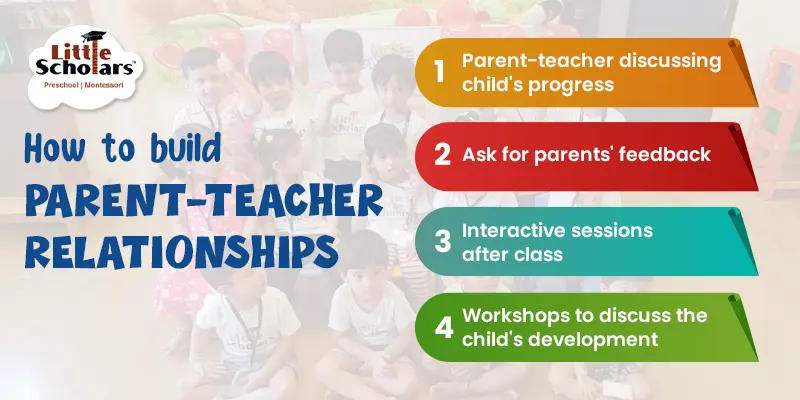
How To Build Parent-Teacher Relationships
Here are some of the efforts employed by Little Scholars Playhouse and Montessori, the best play school in Kolkata, to improve communication with the parents.
- Frequent meetings to discuss the concerns and the child’s progress.
- Encourages feedback, questions and honest conversations from parents.
- Initiates short and frequent interactions after class.
- Organises workshops to guide parents about their child’s development.
Conclusion
The main goal of parent-teacher communication is to support a child’s growth. In fact, it is the foundation of a child’s successful learning and developmental journey. Little Scholars Playhouse and Montessori, the best playschool in Kolkata, always places a high value on communication with parents, which leads to improved student outcomes.

